Scraping, Sanding and Priming: Why Prep Decides How Long Exterior Paint Lasts
· By Sergio Pereira
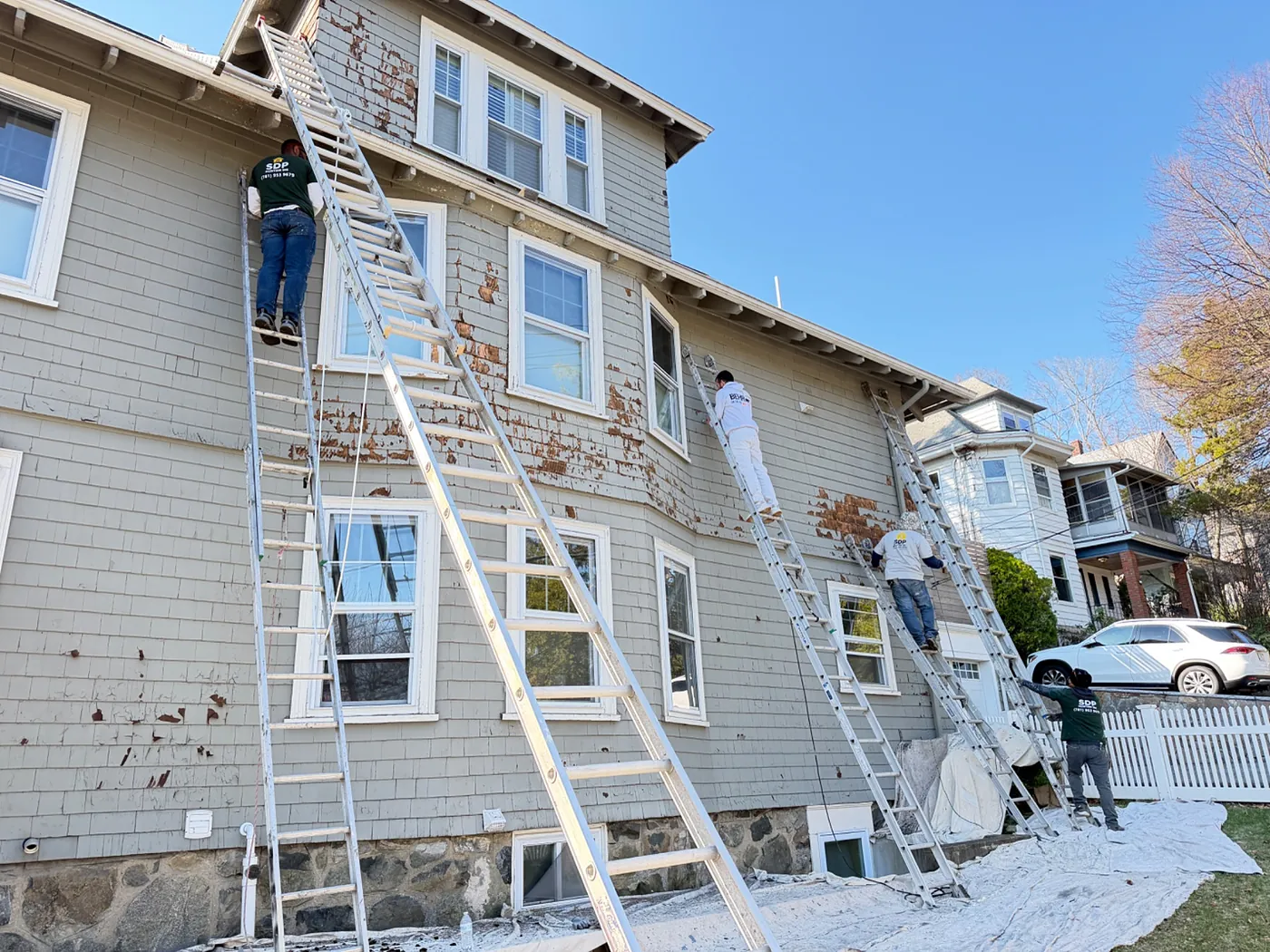
Ask any experienced painter what makes a paint job last and you will hear the same word: prep. The best paint in the world will fail on a dirty, chalky, peeling surface. On older homes around Arlington, where siding may carry decades of layers, prep is most of the job.
Here is what proper preparation looks like, so you know what to expect and what to ask for.
Step 1: Clean
Dirt, pollen, chalky paint and mildew all keep new paint from bonding. The house is washed first, gently, so water is not driven into the wood or behind the siding. Then it needs time to dry before anything else happens.
Step 2: Scrape
Every loose or lifting piece of paint comes off. This is slow, hand work with scrapers. The rule is simple: if it is loose, it goes. Anything left behind will eventually pull the new paint off with it.
Step 3: Sand and feather the edges
Where old paint meets bare wood there is a ridge. Sanding those edges smooth helps the new coat lay flat and keeps the patchy look from showing through. Glossy surfaces like old trim are scuffed so the new paint can grip.
Step 4: Repair
Soft or rotted wood is cut out and replaced or repaired. Nail holes and small gaps are filled. Old cracked caulk is removed and joints are recaulked. This is the step that keeps water out of the wall for the next decade.
Step 5: Prime
Bare wood and repaired areas get primer. Primer seals the wood, blocks stains and gives the topcoat something to hold on to. Skipping it on bare spots is one of the most common reasons a fresh paint job peels early.
Step 6: Two finish coats
With the surface clean, sound and primed, two coats of quality exterior paint give even color and a thicker protective film than one coat can.
A note on older homes
Homes built before 1978 may have lead paint in the older layers. Federal rules require lead-safe work practices when contractors disturb those surfaces, including containment and careful cleanup. When you collect estimates on an older house, ask every painter how they handle it.
How we do it
Prep is the part we take the most pride in. On every exterior job, the scraping, repairs and priming are written into the estimate so you know exactly what is being done before the color goes on.
Frequently asked questions
- How long does prep take?
- On a house in good shape it can be a day or two. On an older house with lots of peeling it can be most of the job. The estimate should reflect it.
- Do you remove all the old paint?
- Usually not. Sound, well bonded paint stays. Only loose and failing paint is removed, then edges are sanded and bare spots primed.
Related services
Serving
Found this helpful? Make us a preferred source on Google.
Ready for an exact price?
Get a free, no-pressure in-home estimate. Real numbers for your home, not a phone guess.