
Rotted Trim and Siding: Repair Before You Paint
· By Sergio Pereira
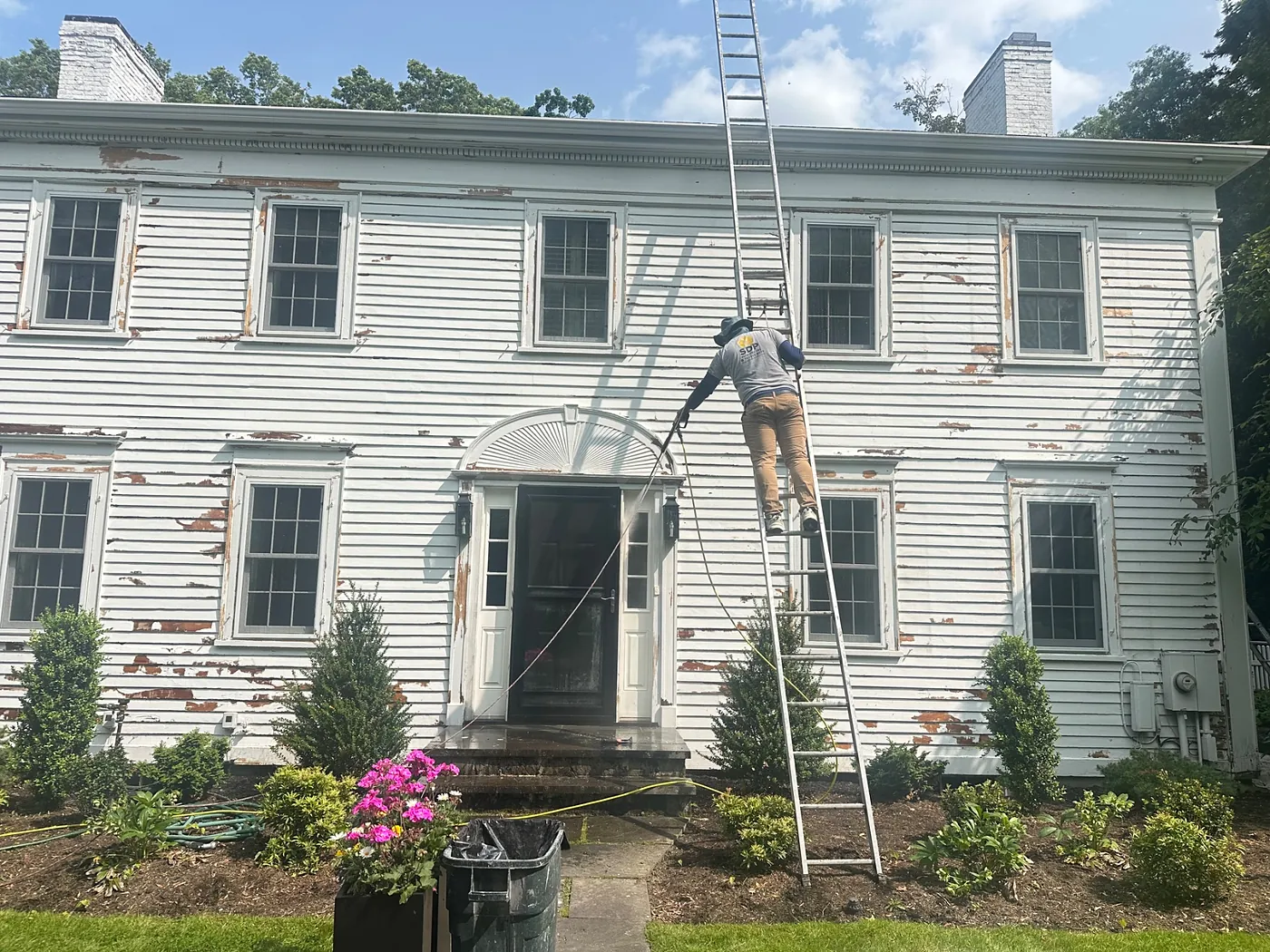
On older homes around Arlington, Somerville and Cambridge, one of the most common surprises during a paint job is rotted wood. Window sills, the bottom of corner boards, porch rails and clapboards near the ground take the most water, and over time some of them give up.
The good news is that rot caught early is usually a small repair. The bad news is that painting over it does not help at all.
Where rot hides
Look at the parts that stay wet longest: window sills, the lower edge of door and window trim, the bottom of corner boards, porch floors and railings, and siding near the ground or under leaky gutters. Paint bubbling, cracking or looking darker in one spot is often the first sign.
A simple test: press a screwdriver gently into the wood. Sound wood resists. Rotted wood feels soft or spongy and the tip sinks in.
Repair or replace?
Small, shallow soft spots can often be dug out, treated and filled with a wood repair compound, then sanded and primed. Larger areas, or rot that goes through the board, are better replaced with new wood that is primed on all sides before installation.
The goal is a solid surface that will hold paint for years and keep water out of the wall behind it.
Why paint over rot fails
Rotted wood holds moisture. Paint on top traps that moisture, and the wood keeps breaking down underneath. Within a season or two the paint lifts, and the rot has spread further. Fixing it first is always cheaper in the long run.
Find the cause too
Rot almost always has a water source: a clogged gutter, a missing drip edge, failed caulk, soil or mulch piled against the siding. Repairing the wood without fixing the cause means doing it again. A good painter points out what is feeding the problem.
How we handle it
We do carpentry repairs as part of our paint jobs, so the same crew fixes the wood and paints it. If we find rot during the estimate, it goes in writing. If we find hidden damage during the job, we show it to you before doing anything extra.
Frequently asked questions
- Is wood filler enough?
- For small, shallow spots, yes, when the soft wood is removed first. For deep or wide rot, replacing the board lasts longer.
- Should new wood be primed before installing?
- Yes. Priming all sides, including the back and cut ends, keeps the new board from soaking up water.
Related services
Serving
Found this helpful? Make us a preferred source on Google.
Ready for an exact price?
Get a free, no-pressure in-home estimate. Real numbers for your home, not a phone guess.