
Painting a House in Lexington, MA: Antique Colonials, Mid-Century Moderns and Everything Between
· By Sergio Pereira
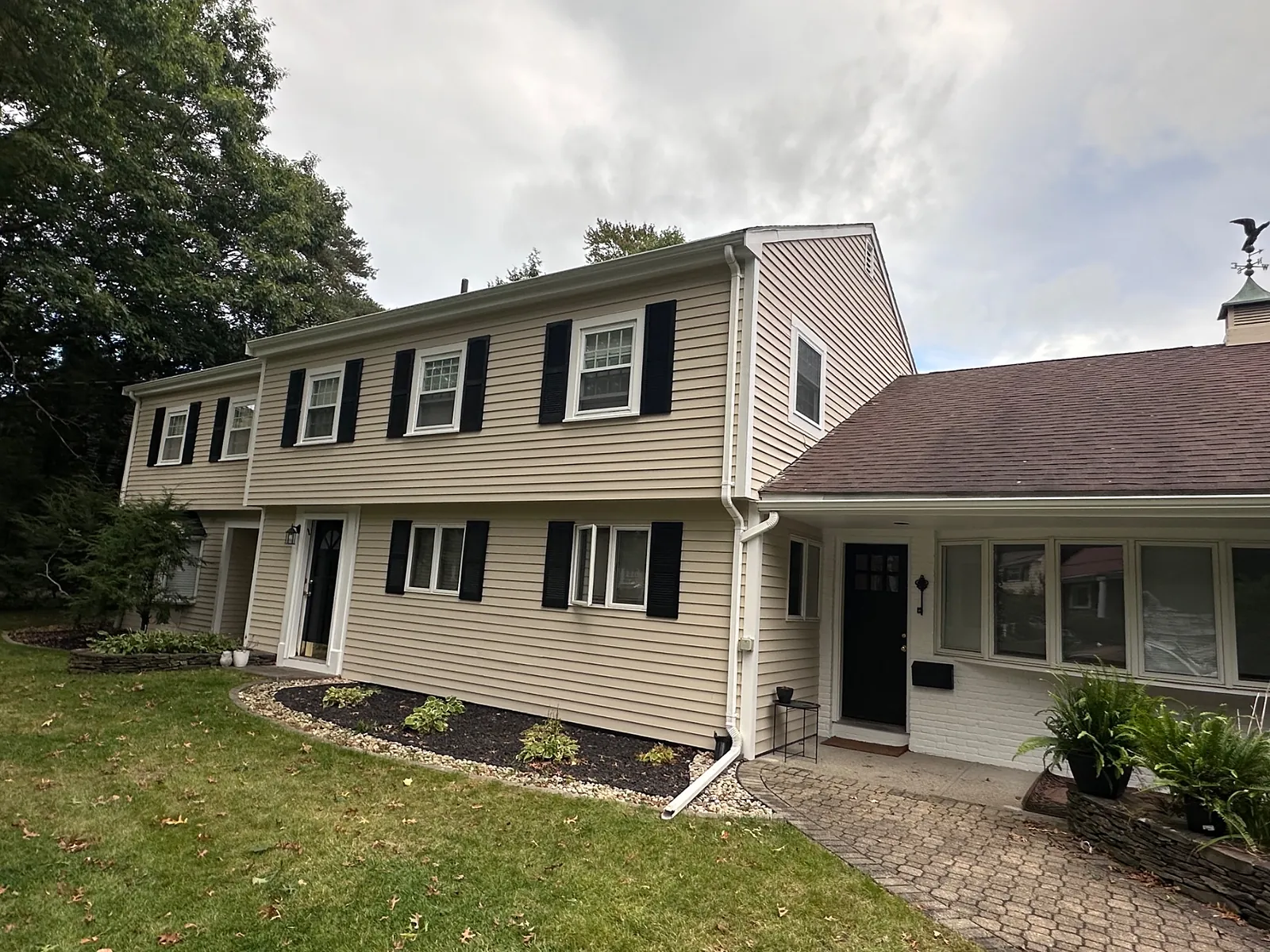
Few towns pack as many house styles into a small area as Lexington. Within a short drive you can pass an antique colonial near the Battle Green, a large center-entrance colonial on a wooded lot, a cape on a quiet side street and a flat-roofed mid-century modern with walls of glass. All of them need paint, but not in the same way.
This guide is for Lexington homeowners who want to plan an interior or exterior paint project with fewer surprises. It covers the main house types, the local rules worth checking, the effect of all those trees, and how to time the work. It is general guidance, not a quote. Every house is different, and the only way to know what yours needs is to walk around it.
Antique and older colonials
Lexington has a large number of homes from the 1700s, 1800s and early 1900s, especially around Lexington Center, East Lexington and along Massachusetts Avenue. These houses usually have wood clapboards with many layers of paint, original window trim, and details like corner boards, cornices and door surrounds that make the house what it is.
On these houses, prep is most of the job. Loose paint is scraped by hand, edges are sanded so the old layers do not telegraph through, failed glazing and caulk are addressed, and bare wood is primed before two finish coats. Rushing any of that shows within a couple of years, usually as peeling on the sunny south and west walls.
Older wood also hides problems. Sills, the bottom of corner boards and the lower courses of clapboard near the ground are the first places to check for rot. Small repairs before painting are far cheaper than replacing whole sections later.
Most of these homes were built long before 1978, so lead paint is likely in the older layers. Federal rules require contractors to use lead-safe practices when they disturb those surfaces, with containment and careful cleanup. Ask about it in every estimate you collect.
Mid-century modern neighborhoods
Lexington is known for its mid-century modern neighborhoods, such as Six Moon Hill and Five Fields, along with other modern homes spread around town. These houses are a different kind of project. Instead of layers of clapboard, you often see vertical wood boards, wide fascia, exposed beams and very large window walls.
Here the challenges are different. Large glass areas mean a lot of careful masking and cutting in. Flat or low-slope rooflines push water toward fascia and beam ends, which are the first places to fail. Many owners also care about keeping the original look, so color choices and finishes tend to follow the architecture: natural-looking stains, earthy tones and crisp contrast on trim.
If your modern home has stained siding rather than paint, think carefully before switching. Going from stain to paint is a one-way door, because getting back to a natural stain later usually means stripping the wood.
Historic districts and town review
Lexington has local historic districts, including areas around the Battle Green and East Lexington, overseen by the Lexington Historic Districts Commission. If your house is in one of them, check with the commission before exterior work. Some changes need review, and a quick call before you pick colors or replace trim can save a delay in the middle of the season.
Even outside the districts, many Lexington owners like to keep a traditional color palette on older homes. Whites, creams, grays, deep reds and historic greens tend to suit the antique colonials, while modern homes look best with colors that respect their original design.
Wooded lots, shade and moisture
Lexington is a green town, and many homes sit on lots with tall trees close to the house. Shade keeps walls cool in summer, but it also keeps them damp longer after rain and morning dew. That is why north and shaded walls in Lexington often show mildew and soft spots instead of peeling.
Three habits help paint last on wooded lots. Wash the siding gently every couple of years so mildew does not build up. Trim branches back so they do not touch the roof or walls, and so air and light can reach the siding. Keep gutters clear, since leaves are a constant in the fall and overflowing gutters soak the trim below.
During the job itself, shade also changes the schedule. A shaded wall may need more time to dry after washing, and painters may start later in the morning so dew has burned off before the first coat goes on.
Interior projects in Lexington homes
Inside, older Lexington homes often have plaster walls, wide trim and original doors. Plaster takes paint beautifully but can have hairline cracks that need to be opened, filled and primed so they do not reappear. Wide trim and paneled doors are slow work and should be listed in an estimate on their own.
Newer and mid-century homes often have open plans and tall ceilings, where the challenge is access and keeping long walls even in color and sheen. Choosing one trim white for the whole house and grouping rooms into one project usually saves time and money.
Timing your project
Exterior painting in Lexington follows the same season as the rest of Greater Boston, usually late spring into fall, with stable temperatures and dry siding as the rules that matter. Because demand is high in spring, the best time to get estimates is late winter, so you have a spot before summer.
Interior work can be done any time of year. Winter is a good season for it, when outdoor crews have more room in their schedules.
Choosing a painter for a Lexington home
Ask any painter how they will prep your specific house type, how they handle lead-safe work on older homes, what product line and number of coats they plan, and who will actually be on site. Ask to see recent work on homes like yours.
Lexington is right next to Arlington, where most of our jobs are, so we are close by for estimates and check-ins. Sergio runs every job himself and gives free, written estimates with the prep spelled out.
Frequently asked questions
- Do I need approval to paint my house in Lexington?
- Painting generally does not need a building permit, but if your home is in one of the local historic districts, check with the Lexington Historic Districts Commission before exterior changes.
- Can you paint a mid-century modern house?
- Yes. The work focuses on careful masking around large windows, protecting beam ends and fascia, and choosing finishes that suit the original design.
- Why does the north side of my house look green?
- That is usually mildew from shade and moisture. Gentle washing removes it, and fresh paint over clean, dry wood holds up better.
Related services
Serving
Found this helpful? Make us a preferred source on Google.
Ready for an exact price?
Get a free, no-pressure in-home estimate. Real numbers for your home, not a phone guess.