
House Painting in Cambridge, MA: Victorians, Conservation Districts and Condos
· By Sergio Pereira
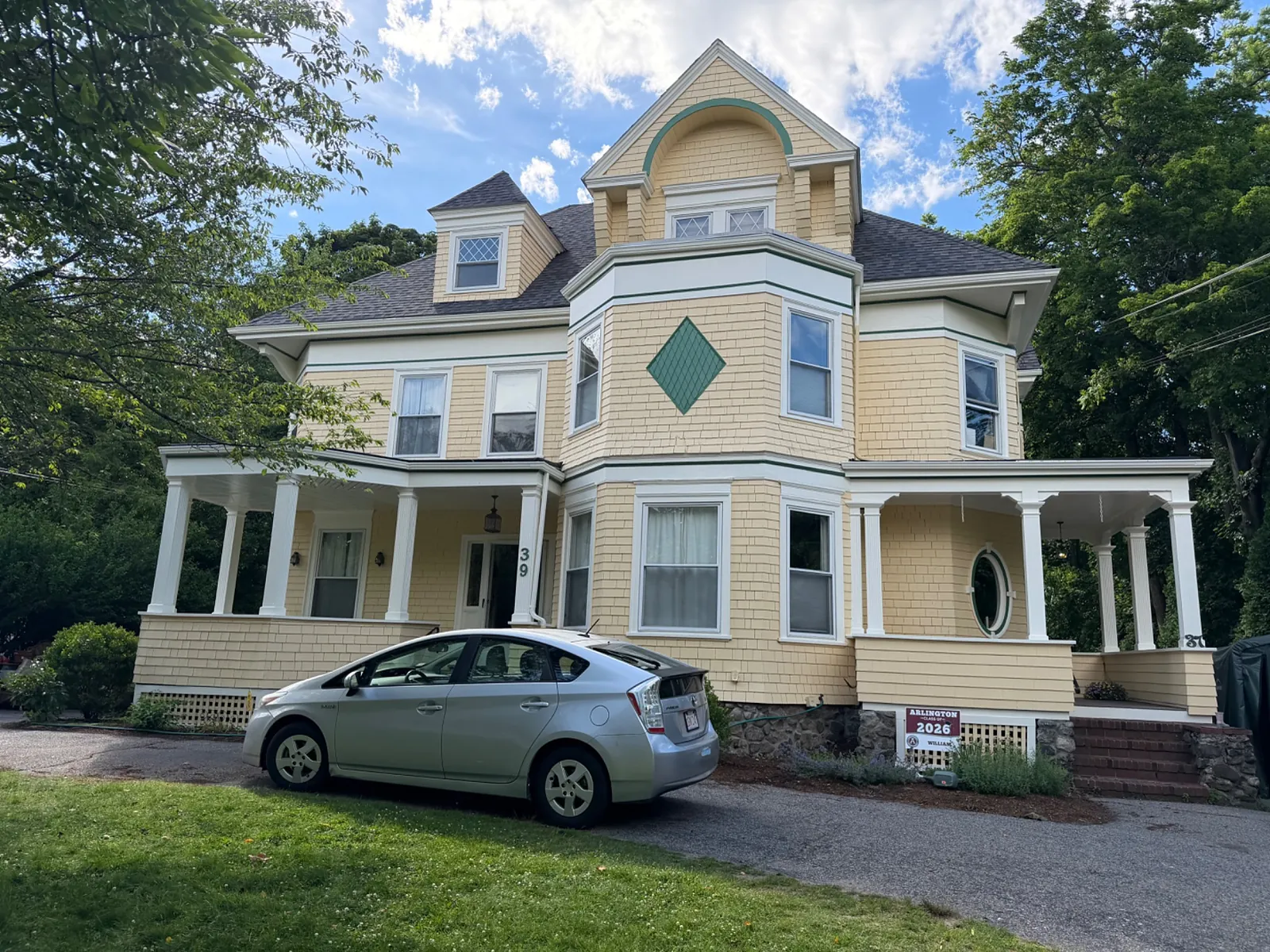
Cambridge has some of the most interesting houses in the Boston area. Mid-Cambridge and Cambridgeport have long rows of Victorians, North Cambridge and the area near Porter Square have plenty of two- and three-family homes, and the streets around Harvard Square and Brattle Street hold grand older homes. Many have been split into condos.
That history makes Cambridge painting projects rewarding, and a little more involved than usual. This guide covers the house types, the city review that can apply, condo logistics and the prep these older homes need.
Victorian detail
Cambridge Victorians often have bay windows, decorative brackets, turned porch posts, spindles, patterned shingles in the gables and multiple trim profiles. That detail is what makes them beautiful, and also what makes them slow to paint well.
Many owners use two or three colors to highlight the detail: a body color, a trim color and an accent for sashes, doors or brackets. More colors mean more cutting in and more time, so they should be clearly described in an estimate.
Prep on these houses follows the usual pattern: scraping loose paint, sanding edges, repairing rot in sills, brackets and porch parts, recaulking, priming bare wood and two finish coats. On a Victorian, the details multiply each of those steps.
Historical Commission and conservation districts
Cambridge has a Historical Commission and several historic and neighborhood conservation districts, such as Mid Cambridge and Avon Hill. Depending on where your house is and what the project includes, exterior changes may need review. Paint color is often treated differently from physical changes, but replacing trim, windows, porch elements or siding can trigger review.
If you are in a district or not sure, check with the city before work starts. It is a short step that prevents delays.
Condo buildings
Many Cambridge houses are now condos with two to six units. For the exterior, the association usually hires the painter, picks colors and splits the cost according to the condo documents. Clear, itemized estimates help boards compare bids and explain the cost to owners.
For interiors, owners can usually paint inside their own unit, but associations often have rules about work hours, hallway protection and contractor insurance. Check those first.
Tight lots and close neighbors
Houses in Cambridge are often a few feet from their neighbors. Ladders sometimes need to be set on the next property, and spray or dust control has to be careful. A friendly heads up to neighbors before the job, and protecting their plants, cars and walkways, makes the work easier for everyone.
Parking near busy areas is limited and many streets have resident permit rules. Plan where the work vehicle will park and where materials will be staged, and check with the city if the job needs street or sidewalk space.
Lead-safe prep
Nearly all of Cambridge's older housing stock was built before 1978, so lead paint is likely in the older layers. Contractors who disturb those surfaces must use lead-safe practices with containment and cleanup, which matters even more on tight lots and near gardens. Ask every painter how they handle it.
Landlords should also know that Massachusetts has a separate lead law for homes where young children live, and that deleading is a different process from lead-safe painting.
Inside Cambridge homes
Interiors often have plaster walls, tall ceilings, picture rails, wide trim and original doors. Plaster takes paint well, but cracks need to be opened and filled properly. Old oil-based trim needs to be cleaned, scuffed and primed with a bonding primer before modern paint will stick to it.
Many owners also remove old wallpaper in older Cambridge homes. Doing that properly means removing the adhesive and priming before any paint goes on.
Choosing colors
Cambridge streets support a wide range of colors, from classic whites and grays to deep greens, blues, plums and warm yellows on Victorians. For multi-color schemes, test the colors together on a large board and view them from across the street. Colors that look great on a chip can feel very different on a three-story wall.
Porches, bays and windows
Cambridge Victorians and two-families often have deep front porches and bay windows, and those are the parts of the house that weather fastest. Porch floors and stair treads take foot traffic and standing water, bay window roofs and sills collect rain, and window sashes on older homes have many small surfaces to prep and paint.
On windows, the old glazing compound that holds the glass is often dried and cracked. Painters can address loose glazing as part of prep so water does not get behind the glass and into the sash. Painting sashes well is slow, careful work, and it is one of the parts of a quote worth reading closely.
Porch floors should be cleaned, sanded where the old finish has failed, repaired where boards are soft and finished with a floor enamel made for traffic. Porch ceilings, often painted a soft blue on older homes, are usually a separate line item because of the overhead work.
Planning the order of work
On a detailed house, the order of work matters. Repairs and carpentry happen first so new wood can be primed with the rest of the prep. Body color usually comes before trim, and accent colors come last so lines stay sharp. Asking how a painter sequences the job tells you a lot about how carefully they work.
Working with SDP Painting in Cambridge
Most of our jobs are in Arlington, just up the road, and we also work in Cambridge. Sergio runs every job himself and gives free, written estimates that list each surface, color and repair, so owners and boards can decide clearly.
Frequently asked questions
- Do I need city approval to paint my house in Cambridge?
- Painting alone often does not need review, but homes in historic or conservation districts should check with the Cambridge Historical Commission, especially if trim, windows or porch parts will change.
- Is a three-color paint scheme much more expensive?
- It adds time for cutting in and for each extra color, so it costs more than a simple scheme. A clear estimate shows the difference.
Related services
Serving
Found this helpful? Make us a preferred source on Google.
Ready for an exact price?
Get a free, no-pressure in-home estimate. Real numbers for your home, not a phone guess.